Every Spiti costing you read online quotes a range so wide it is useless — ₹15,000 to ₹65,000. Both numbers are true, for different trips. This is what each of them actually buys, and what we charge for the two departures we run.
The three ways to do Spiti, and what each costs
The price gap is not about luxury. It is about how many people are splitting the vehicle and the driver, which on a route this long dominates everything else.
| How you go | Per person | What you are paying for |
|---|---|---|
| Shared group departure | ₹14,000–₹20,000 | A seat in a tempo traveller, twin-share rooms, breakfasts and dinners, a driver who has done the road before |
| Private cab, two people | ₹35,000–₹55,000 | The same route with the car to yourselves. The vehicle costs the same; you are just dividing it by two instead of twelve |
| Self-drive or bike | ₹18,000–₹30,000 | Fuel, rental, permits, stays. Cheap on paper until something breaks at 4,000 m |
What is normally left out of the number you are quoted
This is where a ₹15,000 trip becomes a ₹25,000 trip. None of these are unusual costs — they are just rarely in the headline price:
- Inner Line Permit for the Kaza side — small, but it needs an ID and time.
- Lunches. Most packages cover breakfast and dinner. Twelve lunches on the road add up.
- Entry and camera fees at Key, Tabo and Dhankar.
- Oxygen and altitude medication. Kaza sits at 3,800 m and Kunzum crosses 4,590 m.
- The unplanned night. Landslides close this road. A single extra night in Kaza is the most common overrun on the whole trip.
On our departures the stay, the travel, the sightseeing named in the itinerary and a trip captain are already in the price. What is not is written on the trip page in full, before you pay — not discovered at a ticket counter in Tabo.
Manali side or Shimla side? This decides your price
Spiti has two doors and they open at different times of year.
Via Manali — shorter, later, harder
Over Rohtang and Kunzum. It is the quick way in, roughly six days from Delhi, and it is shut until the snow clears — usually late May, sometimes mid-June. You gain altitude fast, which is exactly what altitude sickness likes.
Via Shimla — longer, earlier, kinder
Up through Narkanda, Sangla and Kalpa. Open from around March because it never crosses a high pass to get in. It takes two more days and climbs gradually, which is the single best thing you can do about altitude.
The two departures we run
Fixed dates, one price, and both start from Delhi:
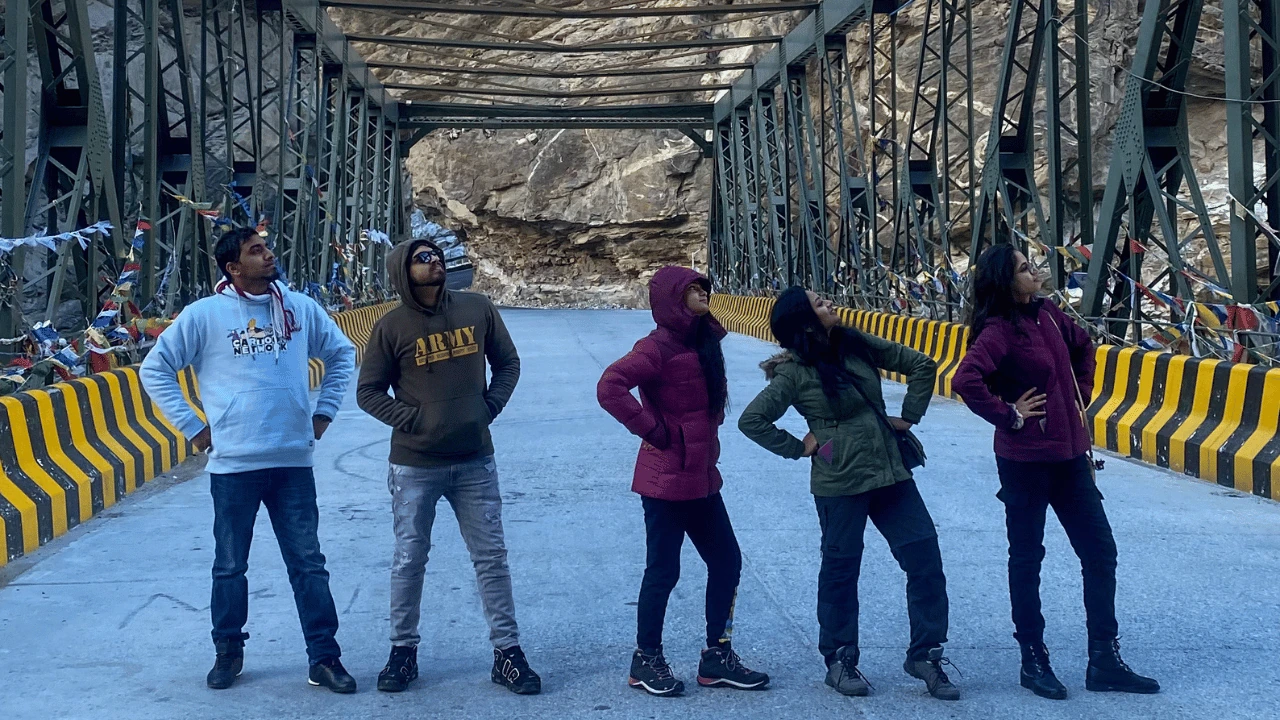 Summer Spiti Valley with Manali6 Days 5 Nights₹14,000
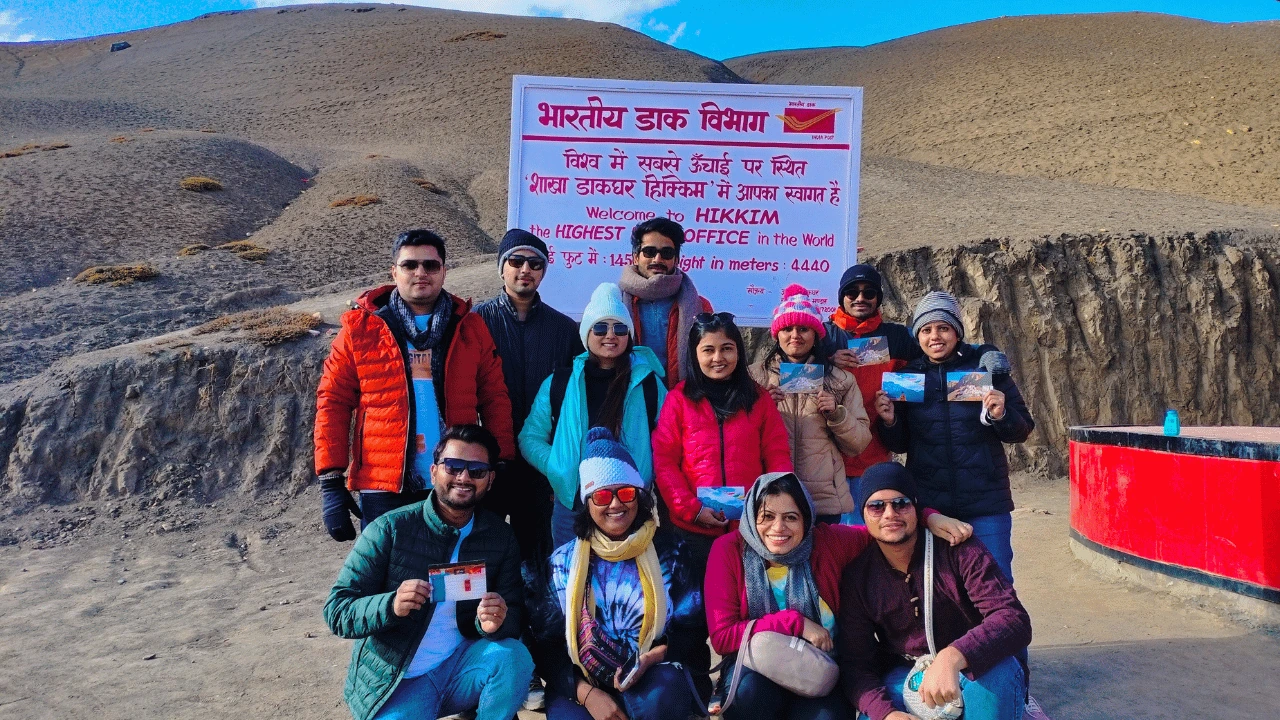 Summer Spiti Full Circuit via Shimla8 Days 7 Nights₹16,800
The 6-day Manali-side trip is ₹14,000 per person. The 8-day full circuit in via Shimla and out over Kunzum is ₹16,800. Both include the stay, the vehicle throughout, breakfasts and dinners, the sightseeing in the itinerary and a trip captain travelling with the group.
When to go
| Month | What it is like | Route |
|---|---|---|
| March–April | Cold, quiet, snow still on the peaks. Chandratal shut. | Shimla side only |
| May | Manali side opens late in the month. Both doors from about the last week. | Either |
| June–September | The full circuit is open. Chandratal accessible. Busiest. | Either |
| October | Clear skies, sharp cold, thinning crowds. Passes start closing. | Either, early |
| November–February | Winter Spiti — Shimla side only, and a different trip entirely. | Shimla side |
Altitude, honestly
Kaza is at about 3,800 m. Kunzum La is 4,590 m. Komic, if you go, is one of the highest villages with a motorable road anywhere. Most people are fine. Some are not, and it has nothing to do with fitness — marathon runners get altitude sickness and their unathletic friends do not.
- Gain height slowly. This is the whole argument for the Shimla route.
- Drink far more water than feels reasonable, and skip alcohol the first two nights.
- A headache that will not shift, nausea or breathlessness at rest means go down, not on.
- Talk to a doctor about Diamox before you leave, not after you feel unwell.